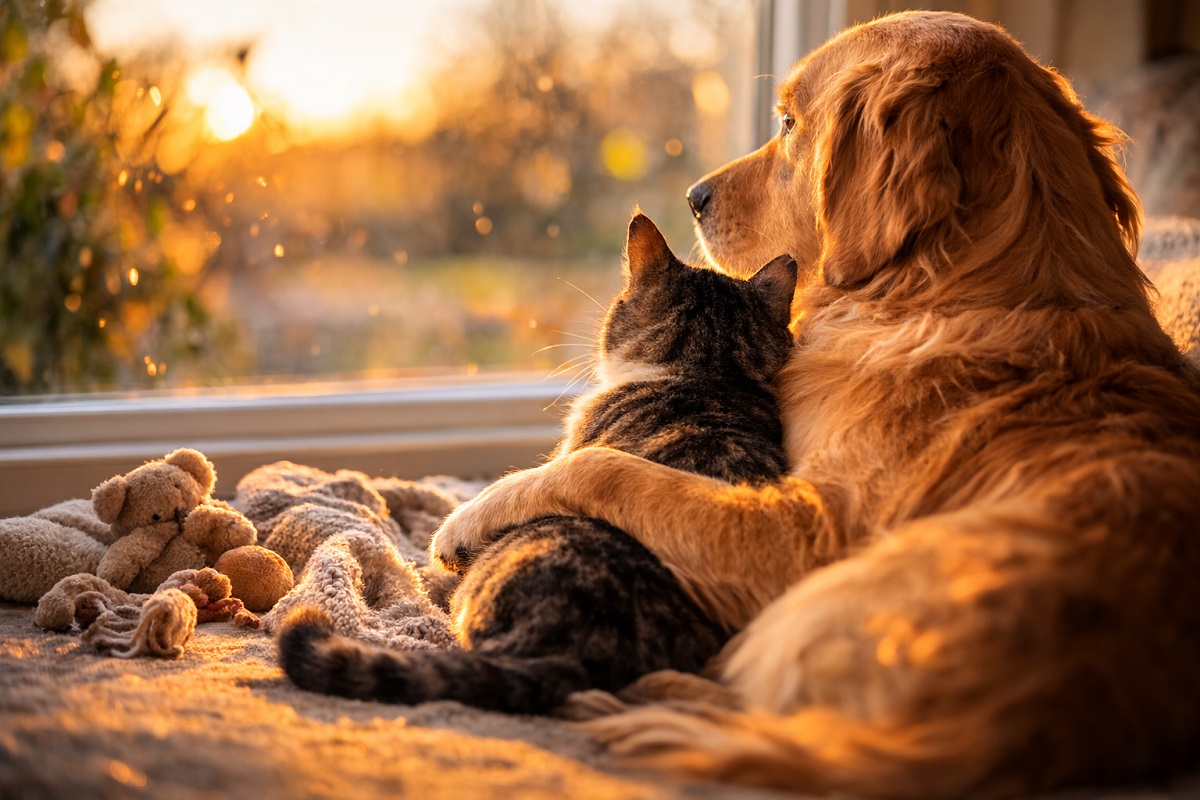
When a beloved pet passes away, the loss is felt not only by the human family – but sometimes by the animals who shared their life.
Many owners notice changes in their surviving pets after a companion dies and this leads many people to ask:
Do pets grieve when another pet dies?
Yes, many animals do show behavioural and emotional changes after the loss of a companion. Dogs, cats, and other pets may search for the missing animal, become quieter or withdrawn, or seek extra comfort from their owners while they adjust to the change.
If you are navigating the loss of a beloved companion, you may also find comfort in our guide: When Goodbye Comes: Understanding the Final Stages of a Pet’s Life.
The Bond Between Animal Companions
Animals living together often form strong attachments. They share:
• Daily routines
• Sleeping spaces
• Social interaction
• Play
• Mutual comfort
• Environmental familiarity
Even pets who did not appear particularly close may still be affected by the sudden absence of another animal in their environment.
Their world has changed – and they notice.
Do Animals Understand Death?
We cannot fully know how animals perceive death in the same way humans do. However, they clearly recognise absence and change.
Pets rely heavily on routine, scent, and familiarity. When a companion disappears, they may:
• Search for them
• Wait in familiar places
• React to missing scents
• Show confusion or distress
While their understanding may differ from ours, their response to loss is genuine.
Common Signs of Grief in Pets
Not all animals show obvious symptoms, but many exhibit behavioural changes after the loss of a companion.
Changes in Appetite
Some pets eat less or lose interest in food. Others may overeat for comfort.
Altered Sleep Patterns
They may sleep more than usual or appear restless.
Searching Behaviour
Animals may look for their companion around the home or wait by doors.
Increased Vocalisation
Whining, barking, or meowing more frequently can indicate distress.
Withdrawal or Depression
Some pets become quiet, less playful, or disengaged.
Clinginess
Others may seek increased attention and reassurance from owners.
Changes in Energy Levels
Activity levels may decrease, or anxiety may increase.
These responses typically lessen over time, but patience and support are essential.
How Long Does Pet Grief Last?
There is no fixed timeline. Some animals adjust within weeks, while others may take months.
Factors influencing recovery include:
• Strength of the bond between animals
• Length of time they lived together
• Personality and temperament
• Environmental stability
• Owner behaviour and emotional state
Pets are highly sensitive to human emotions. Your own grief can also influence their response.
Helping a Grieving Pet Adjust
There are many gentle ways to support a pet experiencing loss.
Maintain Routine
Consistency provides security. Keep feeding, walking, and play schedules stable.
Offer Reassurance
Provide affection and attention without forcing interaction.
Encourage Gentle Activity
Walks, play, and mental stimulation can improve mood.
Monitor Health
If appetite loss or behavioural changes persist, consult a veterinarian.
Avoid Major Changes
Try not to introduce significant household changes immediately after loss.
Your calm presence and steady care help your pet feel safe.
If you are also wondering whether it is ever possible to open your heart to another animal after loss, you may find reassurance in our article:
Opening Your Heart Again: Is Getting Another Pet a Betrayal?
Should Pets See Their Companion After Death?
Some professionals believe allowing surviving pets to see or smell a deceased companion can help them understand the loss and reduce searching behaviour.
This decision is deeply personal and depends on individual circumstances. If done, it should be calm, gentle, and brief.
Many owners report their pets appear more settled afterwards.
Does Getting Another Pet Help a Grieving Animal?
Some people consider introducing another pet quickly to help a surviving animal. However, this is not always beneficial.
A new pet brings:
• New energy
• New routines
• Potential stress
• Adjustment challenges
It is usually best to allow the grieving pet time to adapt before introducing another companion.
When Behaviour Changes Persist
If symptoms continue for extended periods or significantly affect health, professional advice may help. A veterinarian can assess whether behavioural or medical support is needed.
Prolonged appetite loss, severe anxiety, or withdrawal should not be ignored.
The Shared Experience of Grief
One of the most touching aspects of pet loss is the shared mourning that can occur within a household. Humans and animals often grieve together, providing comfort to one another through presence and connection.
Your pet may seek closeness because they sense your loss as well as their own.
This shared experience can deepen bonds and support healing for everyone.
Honouring the Lost Companion Together
Some owners find comfort in including surviving pets in remembrance:
• Visiting favourite walking places
• Maintaining shared routines
• Creating calm remembrance moments
• Continuing familiar activities
These actions provide continuity and reassurance.
Many families also find comfort in knowing their companion is being cared for with kindness and respect after they pass.
If you would like to learn more about the values and care behind Infinity Pet Crematorium, you are welcome to read our story and the experiences shared by families we have supported.
A Gentle Reminder
Animals experience the world through connection, routine, and emotional awareness. When a companion disappears, their behaviour reflects adjustment to change – not weakness or confusion.
With patience, love, and stability, most pets gradually return to their normal selves.
Their resilience mirrors their capacity for attachment.
Love Continues in Many Forms
The loss of a pet changes the emotional landscape of a home. But the love shared between animals and humans does not disappear – it continues through care, memory, and connection.
At Infinity, we provide a range of thoughtful keepsakes that help families honour the memory of a much-loved companion in a way that feels personal and lasting.
Some families also find comfort in creating a Pocket Pet Memorial™ through time2letgo — a personalised online remembrance that lives on your phone, allowing you to open it in a moment and gently reconnect with the memories that mean so much.
By supporting a grieving pet with understanding and compassion, you honour the bond that once united them.
Grief is the shadow of love.
And where love has existed, healing is always possible.
If you are finding it difficult to find your way through pet loss grief, it can sometimes help to read comforting articles on topics such as healing, dreams about pets, remembrance and coping with the loss of a beloved companion.
Frequently Asked Questions About Pet Grief
Do dogs grieve when another dog dies?
Yes. Many dogs show behavioural changes after the loss of a companion. They may search for the missing animal, become quieter, or seek extra reassurance from their owners.
Can cats grieve the loss of another pet?
Cats can also show signs of grief. Changes may include reduced appetite, increased sleeping, or becoming more withdrawn or affectionate.
Should I let my pet see their companion after death?
Some veterinary professionals believe this can help animals understand the loss and reduce searching behaviour. However, every situation is different and the decision should always be made calmly and thoughtfully.



Leave a Reply